Lorine Niedecker's 'Wilderness'
On the wilderness in us and wilderness
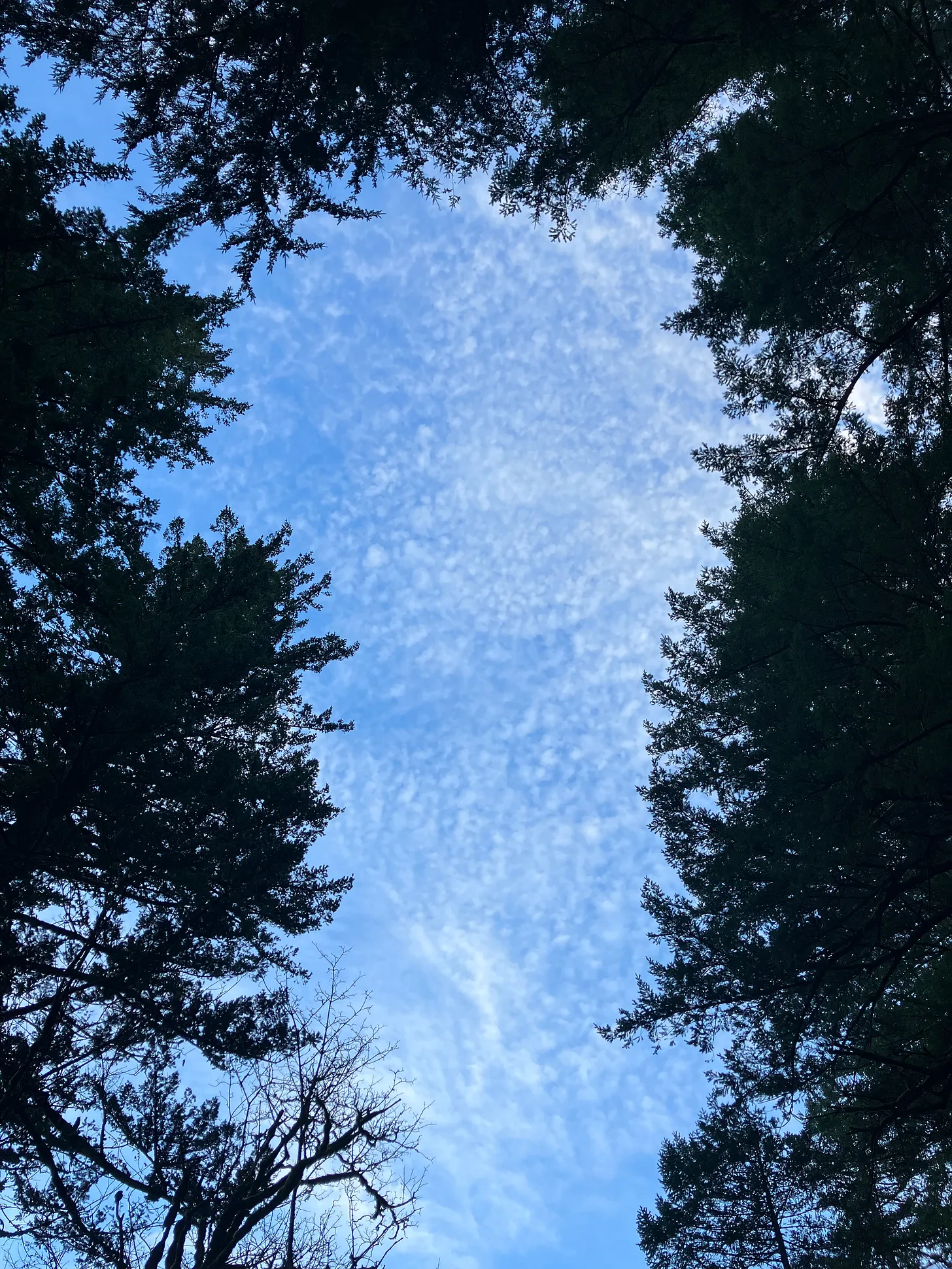
Human freedom—both my own and other people’s—often unsettles me. When someone seems freer than I am, I respond with subtle agitation and aggression. I want them to behave in ways that keep me safe rather than face the uncertainty their freedom stirs up. This discomfort mirrors how I relate to my own inner wilderness: the parts of myself I can’t fully control or predict. My mind becomes critical and vigilant as a result. This extends to how I relate to the world.
Because the world is inherently wild, the urge to control it—by naming, taming, or reshaping it—is understandable. But wildness is not always a threat. In fact, it may be what we need in order to open up to deeper relationships with others and with ourselves.
Lorine Niedecker’s poem “Wilderness” explores this tension between the known and unknown. I want to look at what the poem evokes in me, how it creates that emotional landscape, and what its imagery suggests about our relationship to wildness.
Wilderness
You are the man You are my other country and I find it hard going
You are the prickly pear You are the sudden violent storm
the torrent to raise the river to float the wounded doe
Let’s start with the title. It’s simply “Wilderness”, without a definite article (i.e. “The Wilderness”). The absence of “the” turns the word from a category into a presence, something more intimate, like a name. It signals openness on one hand, ambiguity on the other: this wilderness could be a place, a state of mind, or a person. We are already confronting something undefined before we even enter the poem.
This is fitting for a poem that behaves like a wilderness itself. Poems rely on internal, intuitive logic rather than external order. They ask us to step into their terrain without knowing exactly what we’ll encounter. To understand them, we must enter them on their terms rather than observe them from a distance. The same can be said of what is wild.
In the first stanza, two metaphors describe an unnamed “You,” addressed by an unnamed speaker. This “You” is “the man,” and also the speaker’s “other country.” These images evoke many associations—negative and political (“stick it to the man”), positive and personal (“you’re the man!”), and more intimate ones involving belonging and alienation. The lack of punctuation keeps the lines flat and open, as if we’re meant to feel the ambiguity of this “You” who is both man and country. “You are my other country” suggests a place the speaker belongs to but finds difficult to inhabit, as indicated by the next line “and I find it hard going”. That this country is “hard going” can mean hard to move through, hard to leave, or hard to enter—or all of these at once.
The second stanza shifts the scale. “You” is now a “prickly pear”—something tangible, protective, and potentially painful. The image suggests a being that invites touch but also resists it, that rewards careful handling and punishes recklessness. “You” then becomes a “sudden violent storm” in the next line. The shift in sound—from the soft alliteration of “prickly pear” to the harshness of “violent storm”—creates an abrupt emotional jolt. Yet even within the storm, there is nuance: soft sounds held against sharp ones, gentleness embedded in violence.
In the third stanza, “You” transforms again: “the torrent to raise the river / to float the wounded doe.” These images arrive all at once, as if in a rushing current. The disappearance of the refrain “You are…” makes the metaphors feel more fluid and merged; “You” becomes torrent, river, motion—something that contains and overwhelms, like water. It is water that unifies the images. It is essential, shapeshifting, life-giving, and dangerous.
The narrator might be the wounded doe, though the syntax leaves this unclear. The river may be raising itself in order to float the doe, or the line may simply describe potential rather than actuality. The storm and torrent feel as if they still lurk nearby. Despite this, I feel a sense of calm at the end, as though traveling through this poem’s wilderness has given shape to something internally stable.
It only occurred to me much later that “You” is not a single stable identity but a shifting set of qualities: human, landscape, fruit, storm, river. This instability is the poem’s point. Wilderness is not one thing, nor is the person—or force—to whom the speaker speaks. The poem holds together because of its form, the way its images echo, branch, and transform. It gives coherence to what remains essentially unknowable.
What moves me is this tension between familiarity and mystery. We recognize the images—a man, a pear, a storm, a river—but they remain fundamentally wild, resisting complete interpretation. The poem suggests that this is the truth of all relationships. We never fully know the people or forces we care about. We can only relate to them as best we can.
Wilderness, then, is not just landscape. It is the unknown within and between us. And perhaps the work of love, attention, and art is not to tame it but to learn how to travel through it.